
AI Tools Replacing Jobs by 2030: Shocking Future Prediction & Career Opportunities
How AI Tools Will Replace the Workforce by 2030
Artificial Intelligence has moved beyond science fiction and is now an integral part of our daily lives, specifically affecting the workplace. Predictions depict that by 2030, a significant portion of current jobs will be automated globally. McKinsey & Company reported that the global workforce is expected to increase by up to 800 million workers. This evolution is driven by the development of increasingly sophisticated AI Tools that can perform faster and with more accuracy than any living thing or traditional machine. In this rapid revolutionary time, it’s crucial to identify whether the specific AI Tool is performing better or leading the tech world. Emerging tools are being developed and updated daily; it is crucial to navigate the future changes and prepare for the upcoming opportunities. The human brain naturally takes some time to adapt and adjust to sudden changes.
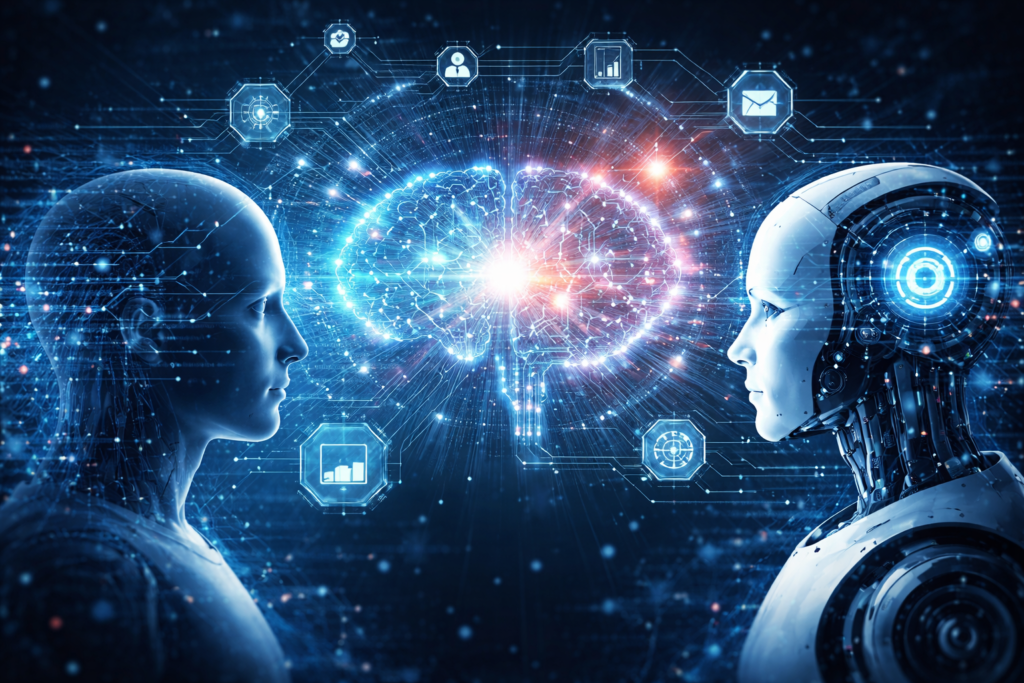
Understanding the Driving Forces: How AI Tools Replacing Jobs by 2030 will impact different industries
Advancement of AI is interconnected with several factors. like, Machine Learning (ML), a subset of AI, which allows the machine to learn from data without programming. This means that AI models can train and improve themselves from collected information. Exponential growth of computing power depends on availability of massive datasets, and continues training helps creating complex and and capable AI model.
Moreover, businesses are continuously seeking ways to reduce operational costs and improve productivity, while competing with growing industries and time constraints. AI offers multiple solutions to a single problem by reducing repetitive tasks. This helps in cast and time savings simultaneously. Development in specialised AI tools in various domains is accelerating rapidly. Natural language processing (NLP) enables machines to understand and generate human language in computer vision to see and interpret images and use data in a versatile way. As it applies to a wide range of industries and job functions.
Key AI Technologies vs Job Placement
Several AI Technologies are transforming due to sophisticated functions and all time accessibility is affecting job market.
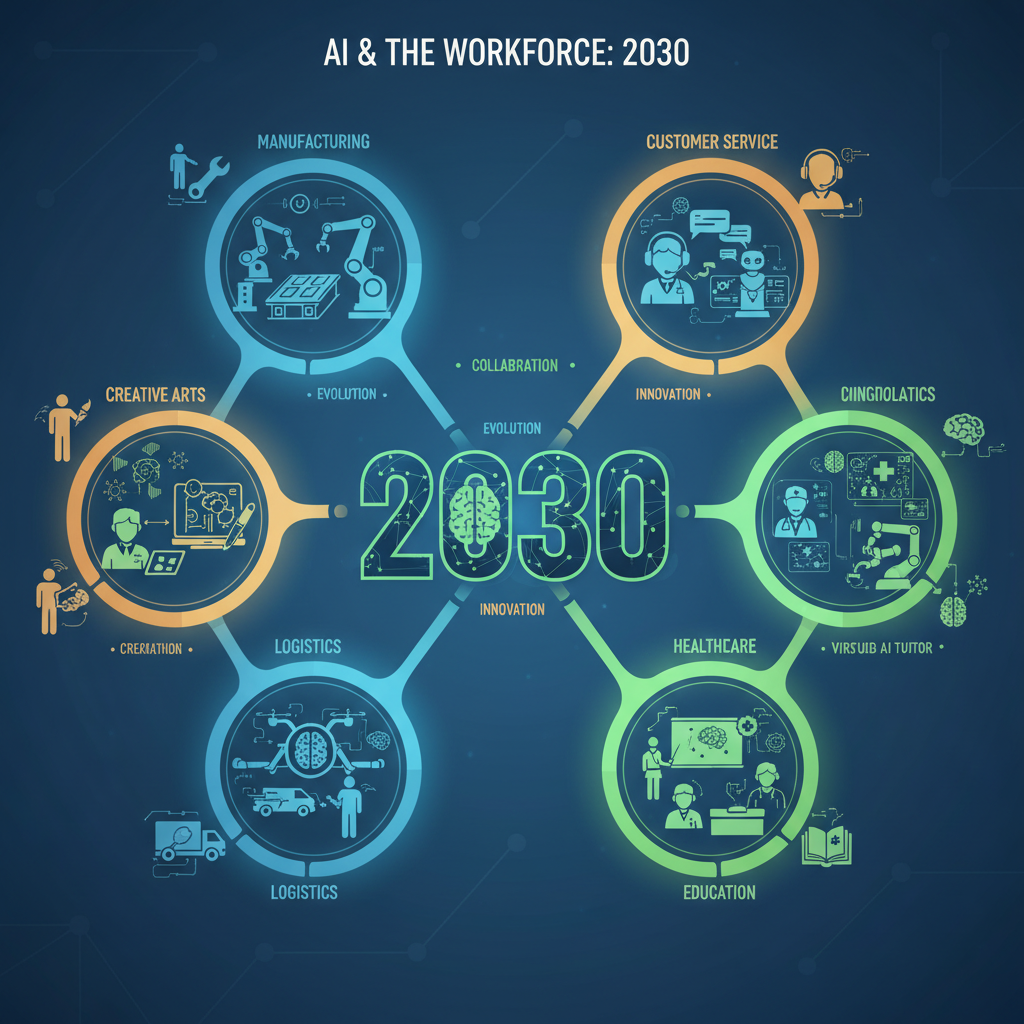
1. Generative AI: Creating Code and Content
Generative AI model is used to create new content, including text, images, music and code. Various tools are used to generate human-like text, summarize complex documents, making presentations from given topics, converting image into text or text into image/video and writing articles or research papers. Some of them are Open AI’s GPT and Google’s LaMDA etc.
- Impact on Jobs: Journalism, marketing, content creation, writing, and translation are among the fields most affected by this technology. Similarly, a significant portion of roles like translator, copywriter, content writer, and data entry have been automated. For example, creating product descriptions, writing business proposals, or drafting could be efficiently done with AI.
- Code generation: Generative AI is also used in software development. There are a variety of tools for developing applications and for automatically detecting and regenerating code. Like GitHub Copilot, ChatGPT, and other tools that generate code lines and even whole functions, create websites and small apps by giving simple textual prompts in any language. Software engineers will not be fully replaced by AI tools, but the nature of their work will change towards advanced designing, problem-solving skills, and code review. Junior developers or the people who are performing routine coding tasks may be impacted.
- Educational: AI is also reshaping traditional teaching methods with advanced educational tools. Rather than doing assignments, searching libraries for notes, explaining topics by generating real-life models, and writing and publishing books, utilising different software effectively. Digital classrooms are becoming more attractive due to a positive learning environment. Distance learning is another positive addition that is reducing labour and travel costs. Moreover, online schools don’t require heavy infrastructure or investment. Teachers or administrators must be aware of tools in their field to compete with advanced technology and achieve more effective outcomes. Otherwise, people without practical knowledge or advanced skills could be highly affected.
According to the World Economic Forum, artificial intelligence will significantly transform the global workforce by 2030.
2. Natural Language Processing (NLP): Understanding and Integrating with Language
NLP is a branch of AI that helps understand, decode, and generate human language, to make it easy to interact with any machine or human being. Chatbots, virtual assistants, translation services, and analysis of human sentiments are big examples of this technology.
- Impact on jobs: NLP has replaced the customer service representatives. Similarly, customer inquiries are also handled by chatbots and virtual assistants, which can quickly respond to basic queries and process transactions. It is ultimately reducing human interaction for Tier 1 support. A clear example is that most banks and businesses are opening and managing their branches or franchises through cloud computing and NLP tools, which is reducing customer hiring and training costs.
- Translation services: AI-powered translation tools can handle large volumes of text quickly, accurately, and economically compared to human translators. It has a great impact on professional translators and the translation requirements of various businesses.
- Data Analysis and Summarisation: NLP tools can process and summarise large volumes of data (text), such as research papers, legal documents, and customer responses, in a personalised and professional way. Hence, the roles of data analysis and researchers, who had to read and summarise extensive data, are highly affected.
3. Computer Vision: “Seeing” and interpreting the world
Understanding and interpreting visual information (images and videos) is now possible through Computer Vision and AI. This technology is used for finger, facial, and eye recognition, object detection in many fields, like image analysis in medical, and autonomous vehicles etc.
- Impact on Jobs: Computer Vision is used for quality control and inventory management in a variety of manufacturing and logistics settings. AI can quickly and consistently detect defects in a product compared to a human, especially quality control inspectors and warehouse workers.
- Security and Surveillance: Security systems in many organisations are implemented using computer vision. Advanced security cameras and detectors are rapidly reducing the jobs of security guards and monitoring roles.
- Medical Imaging: Now, AI is assisting in analysing X-rays, CT scans, and MRIs and identifying all loose holes missed by the human eye. As a result, this technology is reducing the demand for radiologists.
4. Robotics Process Automation (RPA) and Advanced Robotics: Automating Physical and Digital Task
RPA automates repetitive and human-based tasks using software robots. Physical robots perform complex manual tasks, including data entry, report generation, and form processing, etc.
- Impact on Jobs: Data entry and administrative tasks that are highly repetitive, such as clerks, administrative assistants, and back office staff, and data handling, are vulnerable to RPA. Besides that, sequencing, selecting, packing, labeling, and handling products in warehouses, manufacturing companies, and logistics are being replaced by Robots. This technology impacts line workers, delivery drivers to some extent, and warehouse operators. Advanced robotics and AI-enabled autonomous vehicles pose a significant threat to the driving profession.
5. Predictive Analytics and Data Mining: Extracting Insights
A vast data set is used to identify patterns and future trends using AI predictive analytics and data mining tools.
- Impacts on Jobs: The analysts who make future predictions based on collected data in finance, business, and market research are being affected by this technology. It can automate statistical analysis, data aggregation, and various routine aspects. To overcome this danger, AI-generated strategies, plans, and insights must be adopted rather than raw data manipulation.
Augmentation vs. Replacement
Clarifying the augmentation and replacement of jobs is crucial because some AI tools will not fully eliminate human capabilities and their roles. But it will change the nature of their existing roles. A radiologist will use AI in quick and accurate scanning, while their expertise in diagnosis and patient consultation will be in high demand. Similarly, software engineers will use AI code generators for rapid development, but for complex problem-solving and secure software implementation. This shows that tasks within a job are being automated, rather than the entire profession being replaced overnight. Hence, the requirement for skills will evolve with time. Adaptability to learn new tools will be dominant by 2030.
Preparing for an AI-based workforce of 2030
Replacement of AI-driven jobs can be intimidating/frightening, but pre-planning can mitigate/reduce its negative impacts.
- Upskilling and Reskilling: Continuous learning is a crucial strategy. That involves identifying and reskilling the complementary AI tools, rather than developing traditional redundant strategies.
- Understanding how AI tools work and adopting them effectively to increase productivity. Overcoming digital literacy and improving AI fluency are key solutions to these problems. For example, becoming proficient in prompt engineering for generative AI.
- AI provides datasets and suggestions, while humans can analyse situations and make complex decisions by critically thinking and using problem-solving skills. Because machines still depend on human instruction to perform specific tasks.
- AI can generate a variety of content, but real creativity and innovation depend on human-guided instruction and adaptability. Automation can’t replace empathy, negotiation, and human collaboration, which require interpersonal skills and emotional intelligence. Similarly, STEM skills are in high demand, including developing, managing, and deploying AI-based systems that need human interaction.
- Overcoming Fear of AI tools: Instead of creating hype or having fear, individuals and businesses should embrace AI tools. They must focus on learning these tools to improve productivity and create new opportunities. Leveraging AI with human critical skills will be more effective.
- Policies and Educational Reforms: To improve AI literacy, the government and educational institutions should play a vital role in upgrading the curriculum to include AI-based technical skills.
Conclusion
Artificial intelligence will have a significant impact on the global economy by automating human tasks, reducing infrastructure and labour costs, and saving time by the year 2030. AI tools, specifically, generative AI, NLP, computer vision, and robotics, are automating human tasks. This transformation will affect Tier 1 tasks, customer service, manufacturing, content creators, and transportation companies with the use of autonomous vehicles, chatbots, and virtual assistants, and human jobs. Studies show that AI tools will replace jobs by 2030, but this shift will not fully replace human jobs; however, the nature of tasks will change through augmentation and the creation of new roles. To compete with this shifting paradigm, need to focus on upskilling, reskilling, and embracing AI. Strategies and supportive policies ensure that humans and AI work collaboratively to drive innovation and prosperity. In short, adaptability and continuous learning are the keys to success in automation.
Frequently Asked Questions (FAQs)
1. What are AI tools replacing jobs by 2030?
AI tools replacing jobs by 2030 are advanced technologies that automate repetitive and data-driven tasks. These tools can perform activities such as content creation, customer support, data entry, coding assistance, and data analysis, reducing the need for human involvement in some roles.
2. Which jobs are most at risk from AI tools replacing jobs by 2030?
Jobs involving repetitive and predictable tasks are most at risk. These include data entry clerks, customer service representatives, telemarketers, basic accounting staff, and some administrative positions. However, many jobs will evolve rather than disappear completely.
3. Will AI tools replacing jobs by 2030 create new career opportunities?
Yes. While AI tools replacing jobs by 2030 may automate certain tasks, they are also expected to create new opportunities in AI development, machine learning, cybersecurity, data science, AI ethics, digital marketing, and technology management.
4. How can workers prepare for AI tools replacing jobs by 2030?
Workers can prepare by developing skills that AI cannot easily replace, such as creativity, critical thinking, leadership, communication, emotional intelligence, and complex problem-solving. Learning digital and AI-related skills will also increase employability.
5. Which industries will be most affected by AI tools replacing jobs by 2030?
Industries such as manufacturing, transportation, customer service, finance, retail, healthcare, education, and content creation are expected to experience significant changes due to AI tools replacing jobs by 2030.
6. Can AI completely replace human workers by 2030?
No. Although AI tools replacing jobs by 2030 will automate many tasks, human workers will still be essential for decision-making, creativity, innovation, relationship-building, and leadership roles that require emotional intelligence and judgment.
7. What are the benefits of AI tools replacing jobs by 2030?
The benefits include increased productivity, reduced operational costs, improved accuracy, faster task completion, enhanced customer experiences, and the creation of innovative products and services.
8. Is AI a threat or an opportunity for future careers?
AI should be viewed as both a challenge and an opportunity. Individuals who adapt and learn new skills can benefit from the changes brought by AI tools replacing jobs by 2030 and access emerging career opportunities in the digital economy.
9. What skills will be in demand because of AI tools replacing jobs by 2030?
Skills in artificial intelligence, data analytics, cybersecurity, software development, digital marketing, project management, and critical thinking will be highly valuable as AI adoption continues to grow.
10. How many times should I mention AI tools replacing jobs by 2030 in my article?
For SEO purposes, use the keyword naturally throughout the article, including the introduction, headings, FAQs, image alt text, and conclusion. Avoid keyword stuffing and focus on readability.
Proudly powered by WordPress
AI will replace jobs by 2030, the future of jobs with AI.

Leave a Reply